An industrial company may have energy consumption under control and, at the same time, detailed visibility into production volumes and production orders. What is often missing is an integrated view of these two dimensions.
Without this correlation, energy remains an aggregated cost item. It may be useful for overall financial control, but it is far less effective when it comes to understanding the real cost of production.
Industrial energy efficiency becomes relevant exactly at this intersection. Not when looking at total consumption, but when trying to understand how energy affects individual production batches and the operational choices that generate them.
Energy and production as interdependent variables
In more mature industrial contexts, Energy Monitoring systems now make it possible to measure consumption at the level of individual sources, lines, or machines, often using a limited number of measurement points to keep costs and complexity under control. This data foundation is solid and necessary. However, when production processes involve complex cycles, continuous operations, and strict quality constraints, energy data alone is not enough.
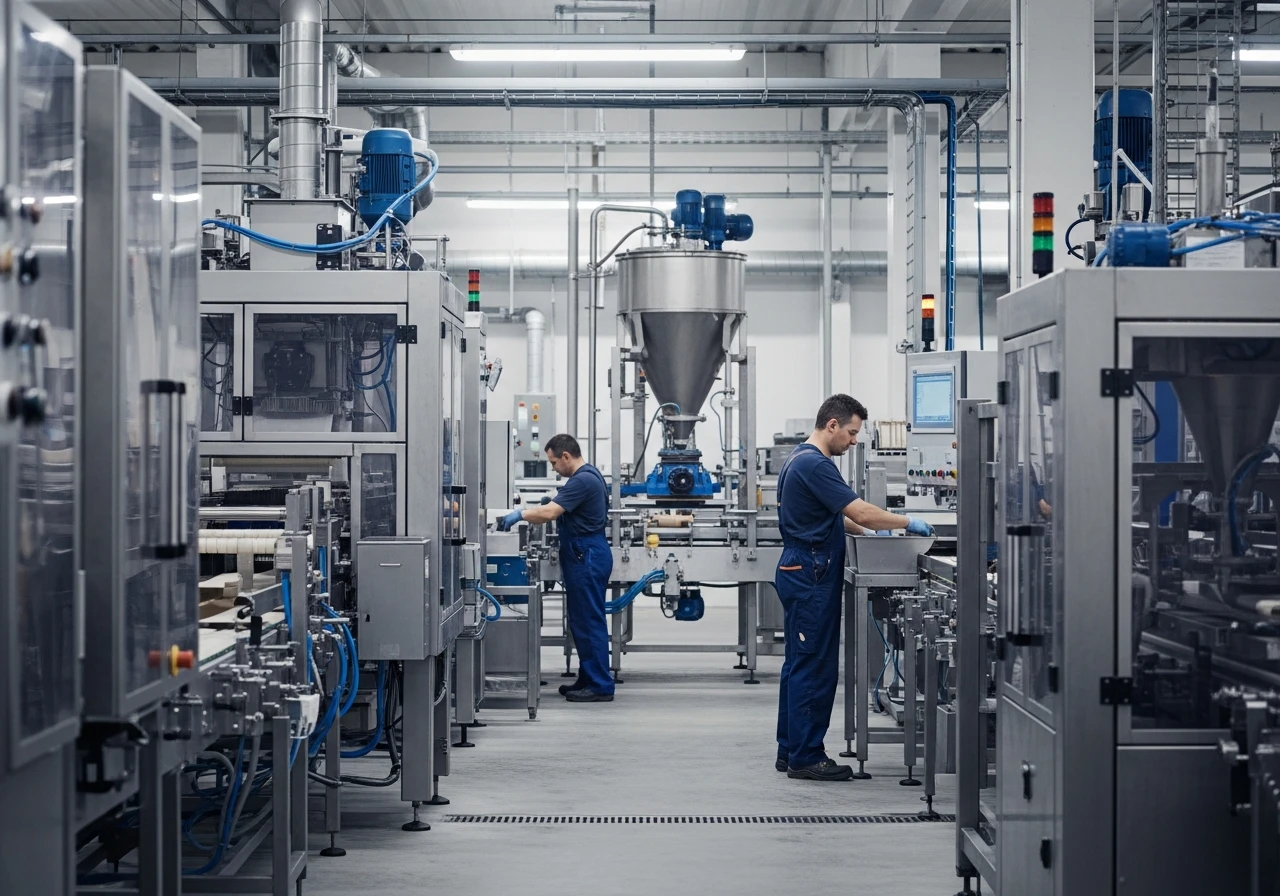
In industrial food production in particular, energy is not a neutral factor. It is an integral part of the process. Cold chains, thermal processes, ovens, and equipment operating within rigid time windows make energy consumption tightly linked to how production is managed. In this scenario, reading energy data without considering what is happening in production means losing critical information.
The limits of energy readings disconnected from the process
Energy analysis based solely on time periods or isolated assets can highlight major anomalies and consumption trends. What it struggles to explain is why, for the same product, some production batches are more expensive than others. These differences rarely appear as clear peaks. More often, they show up as gradual deviations distributed across the process.
Early startups, extended holding phases, waiting times between cycles, or poorly optimized production sequences generate energy consumption with no added value. When these phenomena are not analyzed in relation to production batches, they are absorbed into averages, making the production cost less transparent.
The production batch as the unit of analysis
The production batch is the unit that allows energy, time, and process to be analyzed together. Each batch has a defined duration, goes through specific operational phases, and generates a measurable output. Analyzing energy consumption at this level makes it possible to understand how energy is used during production, not just how much is consumed.
Two seemingly identical batches can have very different energy profiles. The reasons are not necessarily related to the product itself, but to the operating conditions under which production took place. Without batch-level analysis, these differences are difficult to identify and even harder to explain.
Consumption variability and its impact on production cost
When energy consumption is not correlated with production batches, production cost is often estimated using averages. This approach may work for accounting purposes, but it creates an operational blind spot. Consumption variability, instead of emerging as useful information, gets diluted.
In industrial food manufacturing, where margins are often tight and quality standards are non-negotiable, this variability can have a significant impact on profitability. Without a clear link between energy consumption and production batches, it becomes difficult to determine whether rising costs are caused by structural issues or by specific operational practices adopted on the shop floor.
From measurement to association with production orders
Overcoming this limitation requires a logic that connects energy consumption to production orders. Linking energy data with machine activity and production orders makes it possible to allocate consumption to specific production outputs rather than spreading it across time periods.
In an initial phase, this correlation can be implemented at the production cycle level, providing indicators such as energy consumption per cycle or per unit produced. In more structured environments, integration with ERP systems enriches the analysis with information about orders, batches, and scheduling, making energy data easier to interpret and act upon.
Energy efficiency as a decision-making tool
When energy is analyzed in relation to production batches, industrial energy efficiency becomes an operational lever. It becomes possible to compare batches, assess the impact of different planning choices, and identify improvement opportunities without compromising quality standards.
Energy stops being a generic cost to be reduced and becomes a process variable to be managed. This is the point at which energy monitoring evolves into real support for industrial decision-making.
Share This Story, Choose Your Platform!
About the Author: Marco Graziotti