News
Digital Product Passport: a Guide for SMEs
By 2030, every physical good placed on the European Union market must be accompanied by a digital identity card. We are talking about the Digital Product Passport (DPP), a tool designed to radically transform how we track, consume, and recycle industrial products. In this guide, we will explore how the DPP works and the technical requirements needed to obtain it. We will look at imminent deadlines and analyze how Industrial IoT technology can drastically simplify the collection of necessary data. What is a Digital Product Passport (DPP) The Digital Product Passport (DPP) represents a unique digital

OT Security Consulting: 5 Criteria for Choosing a Reliable Technology Partner
The integration between IT (Information Technology) and OT (Operational Technology) domains has broken down the physical boundaries of the factory, but it has also exposed production lines to new cyber threats. Choosing a partner for OT security consulting represents a fundamental strategic decision to ensure operational continuity and the protection of business value. In a landscape where ransomware attacks increasingly target the manufacturing sector, a partner's authority is measured by their ability to speak both the language of bits and the language of bolts. We can no longer afford to view the factory as an office with larger machines: it
Production bottlenecks: why your planning keeps failing
If week after week your production plans are not respected, or orders are delayed despite everyone’s efforts, the issue is very often not “lack of work” or inefficient staff. In most cases, the real problem lies in production bottlenecks. What is a production bottleneck? Simply put, a production bottleneck is a point in the process that slows down or limits the entire line because it cannot operate at the same speed as the other stages. The term comes from the shape of a bottle: the narrow neck is where the flow is forced to slow down before exiting.
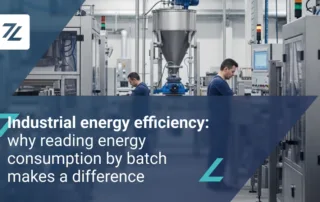
Industrial energy efficiency: why reading energy consumption by batch makes a difference
An industrial company may have energy consumption under control and, at the same time, detailed visibility into production volumes and production orders. What is often missing is an integrated view of these two dimensions. Without this correlation, energy remains an aggregated cost item. It may be useful for overall financial control, but it is far less effective when it comes to understanding the real cost of production. Industrial energy efficiency becomes relevant exactly at this intersection. Not when looking at total consumption, but when trying to understand how energy affects individual production batches and the operational choices that generate

Production Planning: 5 Errors That Slow Down Your Factory (and How to Avoid Them)
Production planning is one of the most critical processes for any manufacturing company. It directly affects on-time delivery, machine efficiency, operating costs, and day-to-day work organization. The context and challenges of production planning Many manufacturing SMEs struggle to keep their production plans stable due to operational variability, incomplete data, and unexpected events on the shop floor. According to several McKinsey analyses, the lack of up-to-date and reliable data in production processes has a direct impact on productivity, delivery performance, and operational efficiency. In this article, we explore the five most common production planning errors, why they happen, and

Unlocking OEE with IoT Production Monitoring: From Symptom to Cause
When OEE (Overall Equipment Effectiveness) falls below expected levels, the question is always the same: where does the problem really come from? Understanding whether the cause lies in machine availability, production speed, or product quality is not straightforward. IoT production monitoring helps identify these issues quickly, guiding managers to efficient production decisions and improving industrial production efficiency across the factory. In this article, you will discover how to transform OEE from a simple indicator into an operational tool, capable of guiding rapid decisions, reducing downtime, and improving collaboration across departments. How to understand why OEE is below target A common
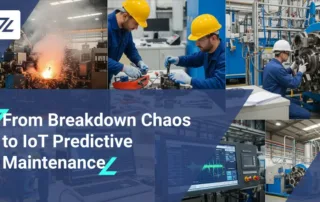
From Breakdown Chaos to IoT Predictive Maintenance
In many manufacturing companies, the maintenance department still operates in a constant state of emergency. When a machine stops, a race against time begins to repair it, causing delays and inefficiencies in production. Implementing IoT predictive maintenance can transform this scenario. Why is maintenance always in emergency mode? Even when a preventive plan exists, it is often ineffective for several reasons: Rigid interventions – based on fixed intervals rather than real machine data. Premature or delayed maintenance – some tasks are performed too early, others only after a breakdown, causing machine downtime. Lack of real-time monitoring – managers have
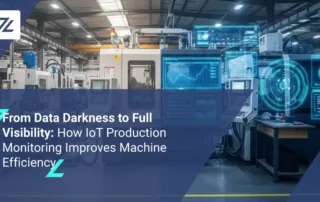
From Data Darkness to Full Visibility: How IoT Production Monitoring Improves Machine Efficiency
IoT production monitoring is essential to understand whether a company is getting the most out of its investments. With the right production monitoring solutions, it’s possible to move from fragmented data to a single, unified view, helping balance workloads, reduce downtime, and plan precisely, ultimately supporting real time production monitoring and production optimization. How can you tell if machines are being used optimally? In this case study, a metalworking company had just invested in new machining centers, but managers were asking: "Are we really making the most of our machines?" The main issue was fragmented reporting: data was
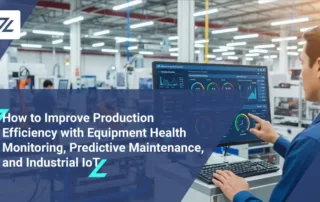
How to Improve Production Efficiency with Equipment Health Monitoring, Predictive Maintenance, and Industrial IoT
Keeping machinery running continuously and at optimal performance is one of today’s main challenges in manufacturing. Equipment Health Monitoring, powered by IoT solutions and predictive algorithms, is a strategic lever to cut costs and optimize processes. What is the impact of unplanned downtime on production? Every unexpected machine stoppage generates costs, delays, and cascading inefficiencies. Even in simple production lines, such as a press or a conveyor belt, downtime has an immediate impact on productivity. Digital monitoring enables real-time detection of anomalies. Through sensors and software, data is collected on cycles, speed, output, pauses, and operating conditions. These data
How to Boost Productivity by Reducing Downtime: A Packaging Industry Case Study
Discover how an Italian SME in the packaging industry transformed its operations—shifting from a reactive to a proactive approach—thanks to the Zerynth platform for machine maintenance monitoring. What was the issue: why was production slowing down? A packaging machinery company in Italy was facing a critical challenge: No real-time visibility on machine status Difficulty identifying prolonged downtime Reactive instead of preventive maintenance Increasing waste of time and resources Production monitoring was entirely manual. The result? Slow decision-making, emergency fixes, and a negative impact on production optimization. How does smart rule-based monitoring work? To increase productivity and reduce downtime, the