By 2030, every physical good placed on the European Union market must be accompanied by a digital identity card. We are talking about the Digital Product Passport (DPP), a tool designed to radically transform how we track, consume, and recycle industrial products.
The transition to the Digital Product Passport is not just a new regulatory obligation introduced by Europe, but a strategic lever for SMEs that want to certify the quality and sustainability of their production on a global scale.
In this guide, we will explore how the DPP works and the technical requirements needed to obtain it. We will look at imminent deadlines and analyze how Industrial IoT technology can drastically simplify the collection of necessary data.
What is a Digital Product Passport (DPP)
The Digital Product Passport (DPP) represents a unique digital identity assigned to a physical product. We can imagine it as a dynamic registry, accessible via a physical carrier such as a QR code or an NFC tag, which contains detailed information on the entire life cycle of the good. Born under the umbrella of the Ecodesign for Sustainable Products Regulation (ESPR), the passport must make crucial data transparent:
- Origin and chemical composition of materials.
- Production processes and overall energy impact.
- Instructions for use, repair, and disposal.
- Sustainability certifications and carbon footprint.
The European Union’s goal is ambitious but necessary. It aims to foster a circular economy and combat greenwashing by providing authorities and consumers with verifiable data for truly informed purchasing decisions.
Requirements and Regulations. What the ESPR Regulation provides
The reference regulatory framework is the ESPR, officially published in July 2024. The regulation establishes that the digital passport will become mandatory for almost all product categories, with the specific exclusion of food, feed, and medicines.
The legislation requires companies to ensure data interoperability. Information must be based on open standards so that it can be easily consulted by every stakeholder along the supply chain, from producers to final recyclers. Another fundamental pillar is data integrity. Every environmental declaration must be supported by traceable and non-manipulable information.
How to obtain a Digital Product Passport
Obtaining a DPP is not limited to printing a QR code on the packaging. The process requires a solid digital infrastructure that starts from the meticulous mapping of every piece of information needed along the chain, from raw materials to transport.
This data must then feed a cloud-based Digital Twin formatted according to European standards. Only then is it possible to apply the unique identifier to the product that points directly to the updated version of the passport. The real critical knot for SMEs lies precisely in the initial collection phase, where recovering granular data is complex without full factory digitalization.
European Deadlines. Who must adapt by 2026-2027
The implementation of the digital passport will happen gradually, starting with sectors with the highest environmental impact or greater recycling potential:
- 2026: First obligations for intermediate products in steel and aluminum.
- February 2027: Mandatory for industrial batteries and electric vehicles.
- By 2027: First delegated acts for the Textile, Fashion, and Tire sectors.
- 2028-2029: Extension to Furniture, Furnishings, and Mattresses.
This temporal progression reflects the priority assigned by Europe to the transparency of the most critical supply chains, allowing other sectors the necessary time to structure their information flows.
Industrial Use Cases. From Fashion to Mechanics
The Digital Product Passport takes different forms depending on the sector affected. In textiles, a brand can certify the organic origin of fibers and chemical dyeing treatments, offering the consumer practical advice to extend the life of the garment.
In the mechanical field, the passport acts as an advanced maintenance log. It records work cycles, hours of use, and repairs carried out, preserving the residual value of the asset in the used market thanks to certain data.
For consumer electronics, the tool facilitates the right to repair. It instantly provides technical diagrams and spare part availability, simplifying the recovery of precious materials like rare earths during disassembly phases at the end of life.
The Operational Data Challenge. Manual vs Automatic Collection
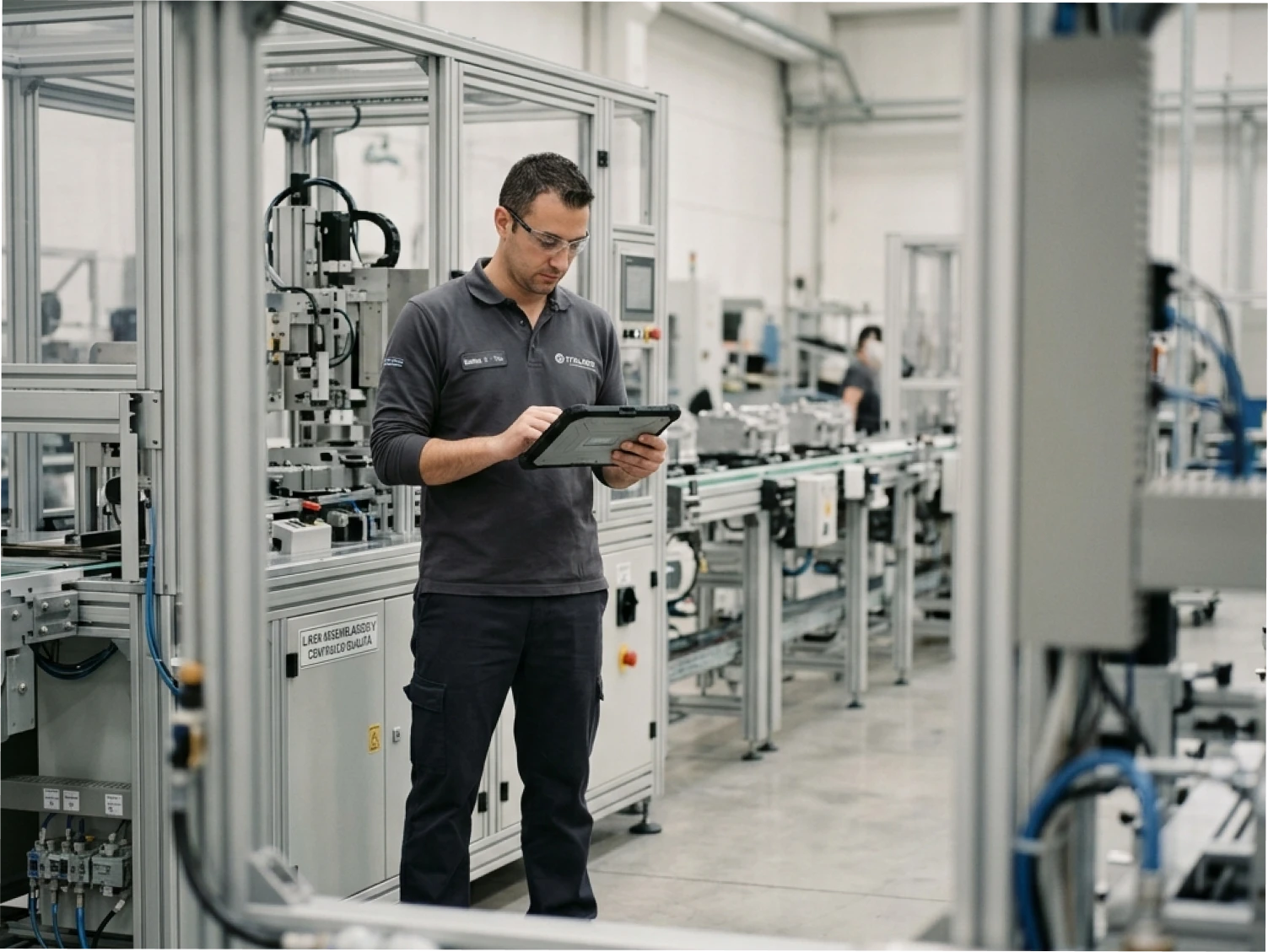
Many manufacturing companies still use manual processes or disconnected information systems. In this context, compiling the digital passport risks becoming a heavy bureaucratic burden subject to human errors and disputes during audits.
The real challenge of the DPP is not where to save the data, but how to generate it. Data entered manually on a spreadsheet lacks the certifying force necessary for compliance. Extracting information directly from the machinery that produced the good makes the data objective and indisputable.
The Role of Industrial IoT in the Digital Product Passport
Zerynth positions itself as the necessary technological bridge between the physical factory and the digital world of the passport. The platform allows connecting machinery to extract real-time data on production cycles and processing parameters. This connection allows certifying energy and material consumption for every single batch produced.
This creates a solid data base for the automatic calculation of the Carbon Footprint, eliminating the need for laborious manual entries. By leveraging system APIs, data flows directly to the platforms that manage digital passports efficiently.
Start your path to compliance today
The Digital Product Passport obligation should not be seen as a bureaucratic threat. It represents the opportunity to make production more efficient, transparent, and ready for the challenges of the global market. Automating data collection is the first step in transforming a legal obligation into a lasting competitive advantage.
Share This Story, Choose Your Platform!
About the Author: Marco Graziotti