Machines communicate, data flows into dashboards and management systems, production lines are monitored in real time. Everything works, at least on the surface.
But if today someone asked you to clearly explain where production data flows, who can access which systems, and what happens when something breaks along the chain, you would probably need to involve several people and external partners to get a complete answer.
This is where interconnected machinery security comes into play. Not as an alarmist topic, and not as a purely IT concern, but as a natural consequence of factories that have become more digital, more integrated, and also more complex to govern as a whole.
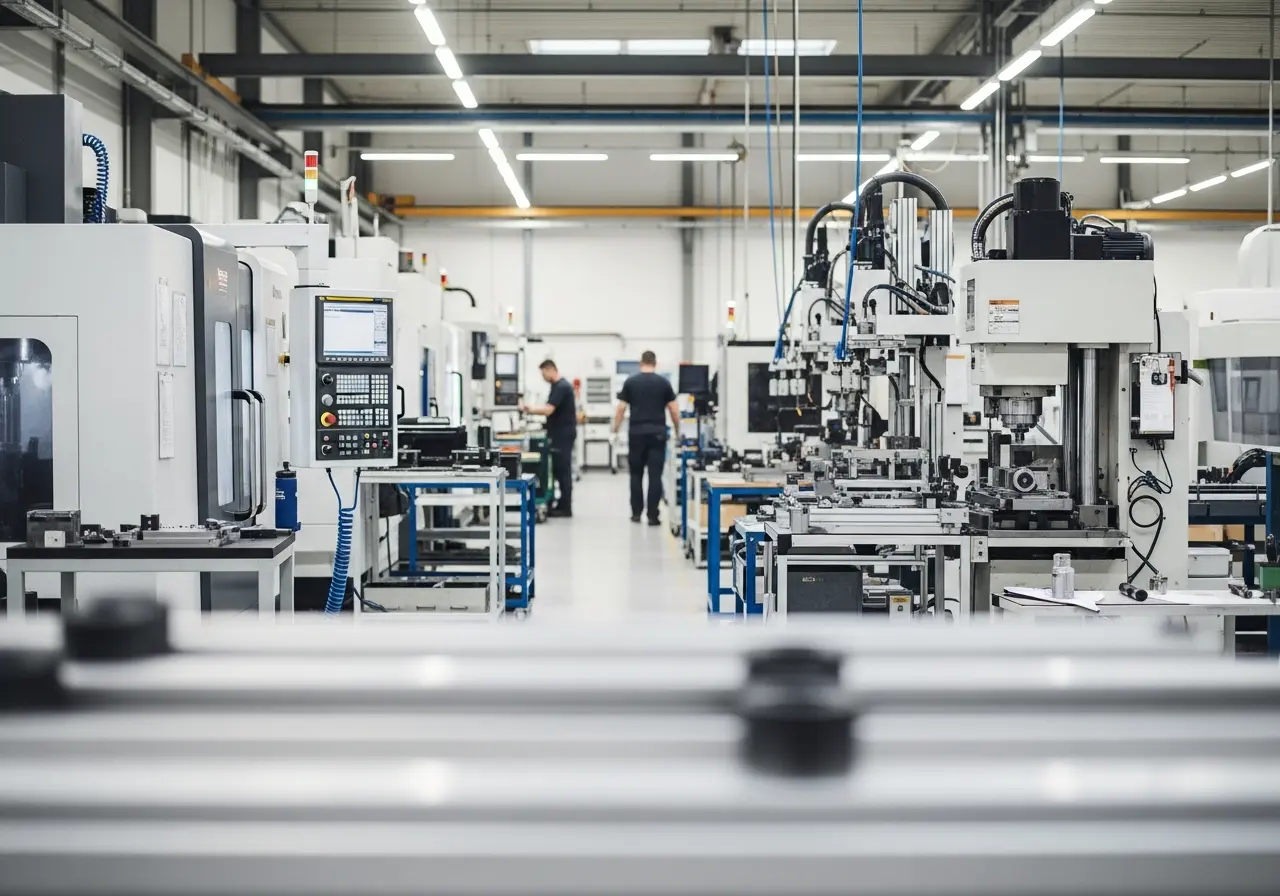
Connecting machines does not automatically mean control
Most manufacturing companies did not design interconnection as a single, structured initiative. It usually happened step by step: first a monitoring system, then an ERP integration, then a new machine already designed to be connected. Each decision made sense at the time.
The result is often a heterogeneous ecosystem where different generations of PLCs, gateways, third-party software, and networks built for different purposes coexist. From a production standpoint, it works. From a control standpoint, things are far less clear.
This is where interconnected machinery security really begins: when companies realize that knowing everything is connected does not mean knowing how it is connected.
Where the real exposure starts in connected factories
Most vulnerabilities do not come from obvious mistakes, but from the natural evolution of industrial environments and the complexity of Industrial Cybersecurity contexts, where legacy systems, layered networks, and incremental integrations coexist within the same production environment.
In industrial settings, this concept goes beyond traditional IT protection. It refers to the set of practices needed to ensure continuity, reliability, and control of interconnected production assets.
Many machines that still operate perfectly today were never designed to be networked. They were adapted, often with effective but localized solutions. When these assets become part of a connected environment without a shared architectural view, they turn into weak points, not because they are faulty, but because no clear perimeter was ever defined.
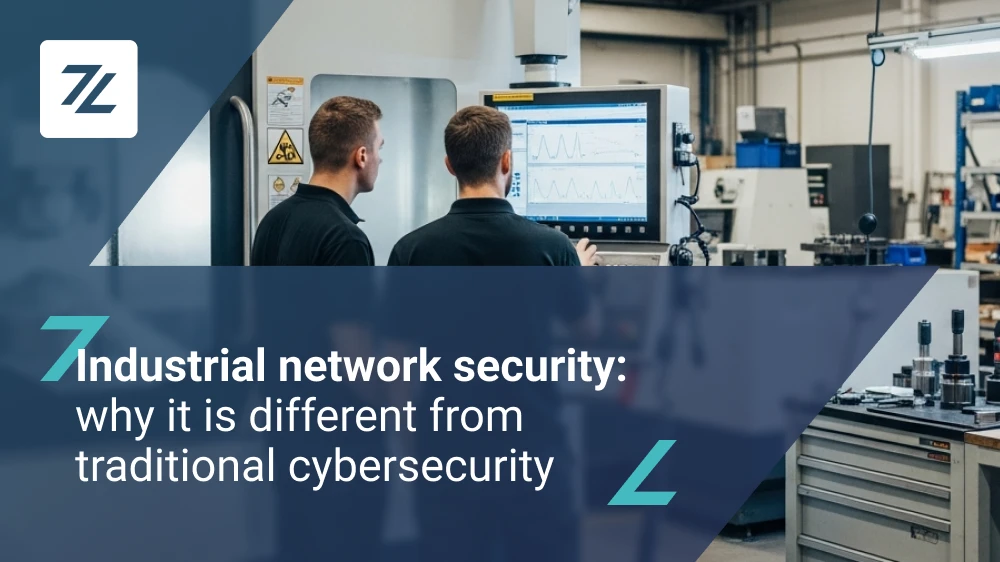
A second critical aspect concerns factory network security, which follows very different rules compared to traditional cybersecurity. Production environments must account for uptime requirements, real-time constraints, and strong dependencies between machines and systems. Without clear separation between production areas, supervision systems, and business services, a local issue can quickly propagate. Instead of containing errors, the network amplifies them.
On top of this comes the issue of access. Maintenance technicians, system integrators, technology suppliers. Remote access is now essential, but it is often handled informally. Temporary accounts that remain active, shared credentials, connections kept open “just in case.” This is not negligence, but lack of governance.
Why security is often addressed too late
In many companies, security is postponed because it is associated with complex, expensive, and potentially disruptive projects. It is perceived as something that might slow production rather than support it.
Yet understanding why industrial cybersecurity is vital for your factory means recognizing that its primary goal is not to block operations, but to make them more predictable and manageable over time.
The paradox is that postponing the topic actually increases risk. When there is no baseline of control, even a minor event—such as a configuration change, a network issue, or an unexpected access—can lead to consequences that are difficult to diagnose. Emergency interventions are always more costly than gradual, structured improvements.
Addressing interconnected machinery security progressively allows companies to act without interrupting production flows, starting by clarifying what is truly critical and what is not.
Factory network security is an operational issue, not an IT one
Talking about factory network security does not mean adding unnecessary complexity. It means acknowledging that, in manufacturing environments, the network is part of the production process.
If a communication issue stops a line or corrupts production data, the impact is immediate. That is why factory network security cannot be approached in the same way as office IT or traditional information systems. Availability, continuity, and the ability to isolate problems before they become systemic are the real priorities.
This is also why factory network security differs from traditional cybersecurity, as it must protect production continuity first, not just the digital perimeter.
A network designed with basic logical separation and visibility makes it possible to understand what is happening and where to intervene, reducing the risk that a local anomaly turns into a plant-wide disruption.
Industrial data security: reliability comes before confidentiality
When discussing industrial data security, the focus often goes immediately to confidentiality. In production environments, however, the most common issue is data reliability.
Incomplete, duplicated, or context-less data leads to poor decisions. KPIs that do not add up, efficiency analyses that cannot be trusted, maintenance actions based on partial information. None of this requires an external attack. It only takes data flows that are not properly governed.
Ensuring industrial data security therefore means making sure that data accurately represents what is happening on the shopfloor, throughout its entire journey from machines to analytics systems.
A concrete example: when interconnection works, but no one governs it
Imagine a factory that has interconnected its production lines to monitor output and energy consumption. Data flows into central systems, supports operational analysis, and informs daily decisions. Everything appears to be working.
Over time, however, anomalies start to emerge on a specific line:
- short but recurring downtime
- energy consumption values that no longer match historical trends
- intermittent alarms with no clear root cause
The issue is neither a failure nor an attack. It originates from a change made months earlier on a gateway to simplify remote maintenance access. The change itself was not wrong, but it was never documented or monitored. No one had a clear view of which data flows passed through that point and with what priority.
The result was not an immediate production stop, but a gradual loss of trust in the data. This is where interconnected machinery security shows its value: not as protection against extreme scenarios, but as the ability to maintain control and understanding in environments that grow through layers.
One last, often overlooked point
Talking about security in manufacturing does not mean preparing for worst-case scenarios. It means accepting that complexity is now part of industrial processes.
In this context, interconnected machinery security does not add a new layer of control. It makes explicit what is currently implicit.
And when flows, access, and responsibilities are clear, factories become easier to manage, adapt, and evolve over time—without only reacting when something stops working.
Share This Story, Choose Your Platform!
About the Author: Marco Graziotti