When it comes to production planning, many SMEs still treat shift schedules as the ultimate reference point: eight planned hours are assumed to mean eight hours of value creation. But is that really the case?
In reality, machines often spend more time in standby than actually producing. This is where the paradox of the planned shift becomes evident. When strategies are built solely on theoretical data, costly decisions are almost inevitable.
This article aims to close a critical gap: explaining how to move from theory to reality by measuring real capacity using objective data. Production planning must therefore evolve into a continuous, informed process rather than a static sequence of shifts.
From planning to reality: why data is essential
In many companies, production planning stops at a Gantt chart or an Excel spreadsheet. The logic is simple: define shifts, orders, and material availability.
However, without a production monitoring software that captures and interprets signals from the shop floor, every plan remains a gamble. An information gap emerges, where production planning stays static while the factory itself is dynamic.
In this section, we explain why integrating planning with real operational data is essential, and highlight the most common mistakes to avoid.
The planned shift paradox
Imagine an eight-hour planned shift, which in theory should result in eight hours of production. In practice, machines stop for micro-setups, material shortages, tool changes, or adjustments. This discrepancy makes production planning unreliable.
When you measure the difference between planned hours, available hours (when the machine is ready to produce), and productive hours (when it actually produces compliant parts), it often emerges that only 60–70% of the time is truly used.
Without visibility into these numbers, it is impossible to optimize production. This insight clearly shows that production planning must be continuously aligned with real machine conditions to avoid wasted capacity.
Invisible micro-downtime: the hidden enemy of efficiency
Many inefficiencies never appear in standard reports. These are micro-downtimes: stops lasting seconds or minutes that interrupt production flow. Over the course of a shift, they can easily add up to hours of lost time.
A delayed material supply, a tool adjustment, or an unreported fault can all result in a machine being “on” but not producing. This is why a production monitoring software that tracks every machine state is essential. It allows you to identify exactly where to intervene to optimize production and make production planning reflect reality.
Measuring real capacity: tools and metrics
A common question is: how do you turn production planning into an evidence-based system? The answer lies in metrics.
Indicators such as Overall Equipment Effectiveness (OEE) summarize performance in terms of availability, performance, and quality. Alongside OEE, the utilization rate measures how much time a machine is actually used compared to its availability.
Collecting this data requires a production monitoring platform capable of connecting directly to machines and recording every event. Only by comparing planned hours with real operating hours does hidden potential emerge. At that point, production planning can be updated in real time and you can finally understand how to optimize production in a sustainable way.
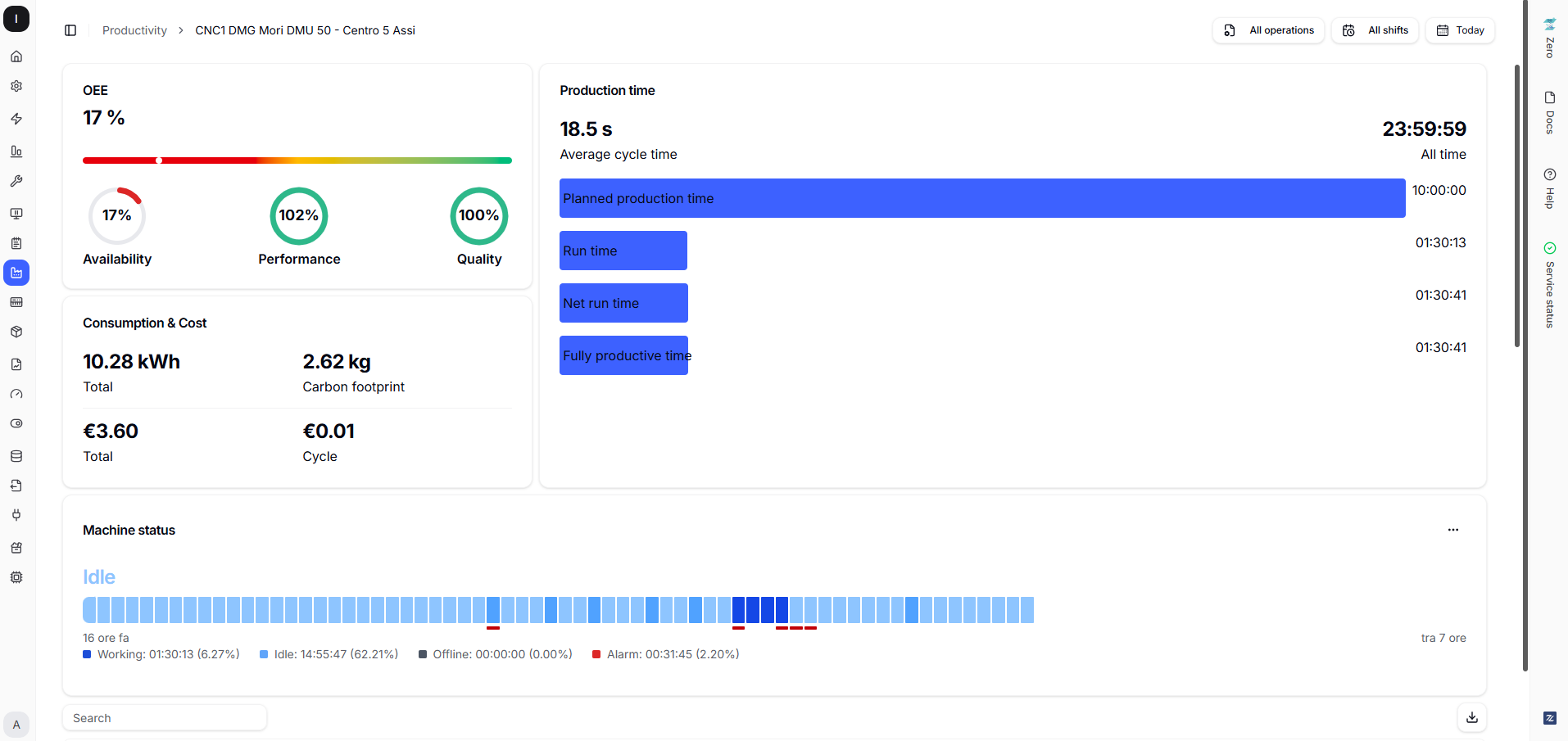
In this Zerynth Production Insights view, the real Utilization Rate is clearly displayed, distinguishing working time, standby, and alarms.
From Excel sheets to production monitoring software
Many planning systems generate optimized production schedules but fail to adapt when shop-floor conditions change. Traditional Excel sheets cannot detect when a machine stops due to material shortages.
A production monitoring software, on the other hand, automatically captures ON/OFF states, alarms, and processing times. This bridge between planning and the shop floor enables dynamic optimization, making production planning far more aligned with actual operations.
Collecting data alone is not enough. It must be interpreted correctly. OEE reveals whether machines run at the expected pace, reach nominal speed, and maintain acceptable scrap rates.
Other key KPIs include utilization rate, Mean Time Between Failures (MTBF), and Mean Time To Repair (MTTR). By comparing these indicators with the production plan, managers can make informed decisions on how to optimize production and when to intervene through maintenance or training. Only with this critical interpretation does data turn into efficient, responsive production planning.
Integrating planning and monitoring: best practices
The real breakthrough happens when production planning is fully integrated with production monitoring software, allowing you to optimize production not just at the end of the day, but minute by minute. Only a data-driven plan can show how to optimize production continuously.
To achieve a complete 360-degree view, the ERP provides orders and bills of materials, the MES orchestrates operations, and IoT sensors transmit machine states. A modern production monitoring system acts as the glue: it receives signals from PLCs, correlates them with production orders, and updates the ERP in real time.
The result is a connected factory where data drives decisions and production planning is constantly fueled by fresh information. This approach reduces response times, improves traceability, and helps optimize production by eliminating idle time.
Automating production planning with AI
Artificial intelligence is transforming production planning. Machine-learning algorithms analyze historical data, predict bottlenecks, and suggest optimal sequences.
When AI is combined with production monitoring software, planning becomes self-adjusting. If a machine starts slowing down, the algorithm proposes a new sequence or recommends maintenance. In this way, production is optimized while minimizing manual errors and increasing flexibility. AI turns production planning into a predictive process rather than a reactive one.
How to get started: practical advice for SMEs
Many business owners know they need to digitalize, but struggle to understand where to begin. Traditional production planning must evolve to remain competitive.
To turn production planning into a data-driven process, three key steps are required: assess digital maturity, choose the right solution, and train the team. Below is a practical guide to starting the journey toward optimized production.
Assess digital maturity and define objectives
Before investing in production monitoring software, it is essential to assess the current situation. Which machines are already connected? What data is available? How is it being used?
An honest assessment helps focus efforts on what truly makes a difference and clarifies how to optimize production without chasing technological trends. This step lays the foundation for modern production planning based on KPIs and performance indicators.
Choosing the right solution: criteria and checklist
Not all systems are created equal. When evaluating a production monitoring solution, make sure it can connect to different types of machines (PLCs, CNCs, automated lines), integrate with ERP systems, and offer customizable dashboards.
It should allow analysis of micro-downtime, calculation of OEE, and provide actionable suggestions on how to optimize production. Finally, choosing a partner capable of supporting companies throughout the transformation is just as important as the technology itself.
Training the team and building a data-driven culture
Data-driven production planning requires people who are ready to use data effectively. Involving operators, maintenance teams, and production managers in training sessions from the start is essential.
Promoting a culture of transparency is the first step. Data is not meant to “control” people, but to provide tools that help optimize production and improve daily work. Only with a prepared team can production planning evolve into a shared, continuous process.
Zerynth Industrial AI Copilot Platform
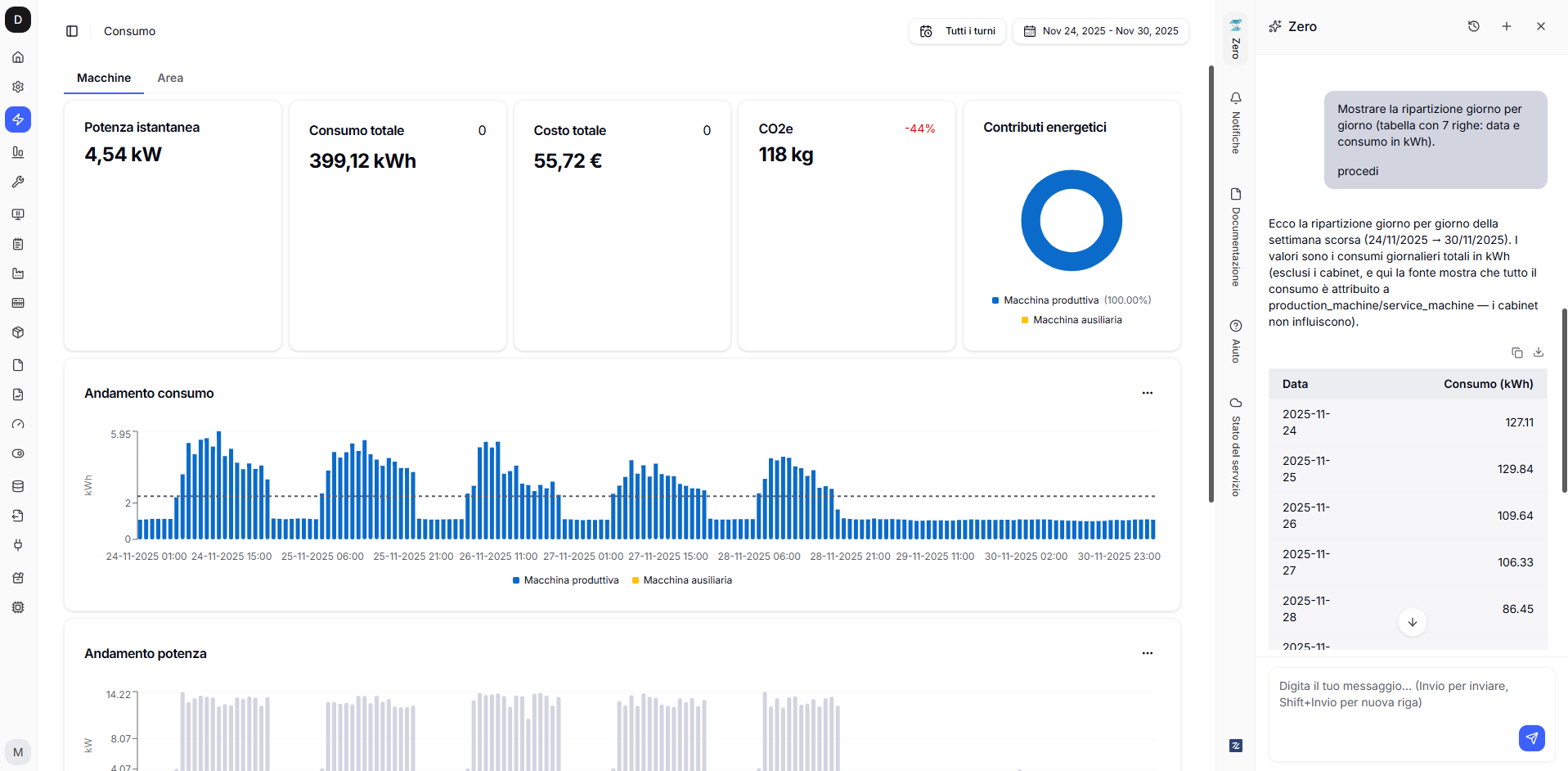
The real value of Zerynth lies in showing how production behavior evolves over time.
With our AI Copilot, Zero, you can interact with your factory using natural language:
“Zero, which machines had a utilization rate below average last week?” and instantly receive actionable insights.
With Zerynth, you can:
- Stop estimating and start measuring: theoretical capacity is an expensive illusion.
- Identify real utilization: distinguishing between available hours and productive hours is the first step toward efficiency.
- Use data to decide: investments in new assets should be backed by clear evidence of existing machine saturation.
Digitalization is not a destination. It is a method. When production capacity stops being an abstract concept, your factory becomes a connected, sustainable, and ultimately more profitable system.
Want to find out how much your machines are really being used?
Book a demo of the Zerynth Copilot Platform and start optimizing your production with real data.
Share This Story, Choose Your Platform!
About the Author: Alice Benozzi