Has a machine ever stopped without warning, leaving production at a standstill and your team scrambling for answers? In most cases, that failure did not come out of nowhere. It was preceded by a sequence of weak signals. In this article, we explore how industrial machinery maintenance can evolve from a cost center into a competitive advantage thanks to IoT and AI.
Reactive industrial machinery maintenance is no longer enough. To stay in control, you need to anticipate problems and turn data into action. In other words, the way we think about maintenance must change.
From unexpected breakdowns to industrial maintenance 4.0
In many traditional plants, maintenance is still reactive. Action is taken only after a breakdown occurs. But industrial machinery maintenance should not be limited to fixing what is already broken. Every recurring alarm or minor deviation from standard process parameters is an early warning sign. Ignoring them means accepting unplanned downtime and unexpected costs.
It is time to rethink industrial machinery maintenance using predictive and digital logic. This transformation paves the way toward industrial maintenance 4.0.
Reactive, preventive and predictive maintenance: differences and limits
Reactive maintenance starts after a failure has already happened. The result is downtime, lost production and emergency interventions.
Preventive maintenance schedules interventions at fixed intervals. It reduces risk, but does not eliminate it, because it does not consider the real condition of the machine.
Predictive maintenance, as an evolution of industrial machinery maintenance, uses sensors and algorithms to monitor the actual health of assets and intervene only when necessary. This model can reduce failures by 70 to 75 percent and maintenance costs by 25 to 30 percent.
In this perspective, industrial machinery maintenance becomes a continuous, data-driven process. IoT maintenance is the natural next step.
Downtime starts earlier than you think
A machine stop is almost always the final stage of a process that began days or even weeks earlier. Intermittent alarms, abnormal vibrations, rising temperatures or declining energy efficiency are signals that industrial machinery maintenance cannot afford to ignore.
By collecting and analyzing these data points, companies can anticipate failures and plan targeted interventions. Maintenance shifts from being an unpredictable cost to becoming part of production planning.
Observing and integrating these signals into a structured industrial machinery maintenance strategy means fewer surprises and a clear move toward industrial maintenance 4.0.
Principles and technologies behind predictive maintenance and industrial maintenance 4.0
Industry 4.0 has transformed industrial machinery maintenance through IoT sensors, connectivity and artificial intelligence. Studies show that adopting these technologies can reduce downtime by up to 50 percent and lower costs by around 30 percent. However, installing a few sensors is not enough. A strategy that integrates data, expertise and platforms is essential.
Industrial maintenance 4.0 extends industrial machinery maintenance beyond simple monitoring. It combines analytics, AI and IoT maintenance to generate continuous operational insights.
To implement effective IoT maintenance, machines must be equipped with sensors measuring key parameters such as vibration, temperature, pressure, electrical current and fluid quality. The collected data are transmitted via Wi-Fi, 5G or LoRa networks to a central platform for processing. Edge computing can filter data directly on-site, reducing latency and data volume.
This continuous data flow turns industrial machinery maintenance into a digital nervous system. Data become the fuel for predictive analysis.
Once collected, data must be interpreted. Artificial intelligence algorithms identify hidden patterns and estimate the remaining useful life of components. Techniques such as vibration analysis, thermography and fluid analysis help diagnose defects. In this way, industrial maintenance 4.0 becomes fully integrated into industrial machinery maintenance, making every intervention more precise and timely.
Measurable benefits and ROI
Implementing predictive maintenance generates tangible benefits:
- Reduction of unplanned downtime by up to 50 percent
- Maintenance cost savings of 25 to 30 percent by eliminating unnecessary interventions
- Extension of machine lifetime by up to 40 percent through continuous monitoring
- Improved energy efficiency by detecting anomalies in motors and fluids
Calculating ROI is straightforward. Compare the value of recovered production time and avoided costs with the investment in sensors, software and training. In many cases, payback occurs in less than two years.
These results demonstrate how industrial machinery maintenance, when integrated with IoT maintenance, creates a concrete competitive advantage and drives companies toward industrial maintenance 4.0.
How to implement a predictive maintenance project step by step
Transitioning to data-driven industrial machinery maintenance requires a structured approach. Technology, processes and people must work together.
Start by identifying the most critical machines for production and the parameters that influence their efficiency. Align technical requirements with business objectives such as reducing downtime, increasing productivity and improving energy control.
This approach ensures that industrial machinery maintenance is both compliant and aligned with industrial maintenance 4.0 principles.
Data collection and connectivity
Select the appropriate sensors to monitor critical parameters. For IoT maintenance, wireless plug-and-play sensors can measure vibration, temperature and energy consumption.
Configure secure communication networks with minimal latency. Use edge gateways for local processing and cloud platforms for advanced analytics. Without a solid data infrastructure, industrial machinery maintenance cannot evolve toward predictive analysis.
Analytics platforms and integration with CMMS and ERP
Collected data must feed an analytics platform integrating predictive algorithms and maintenance management systems such as CMMS. Industrial maintenance 4.0 requires these systems to communicate with ERP and production planning software.
When an anomaly is detected, the system can automatically generate a work order, allocate resources and schedule interventions without disrupting production flow. This integration is the core of digital industrial machinery maintenance and enables the full potential of IoT maintenance.
People and culture
Technology alone is not sufficient. Data-driven industrial machinery maintenance requires cultural change. Train technicians to interpret dashboards and involve operators and engineers in anomaly evaluation.
Collaboration between maintenance teams and data analysts ensures that models are correctly interpreted and adapted to real-world conditions. Clear communication about benefits and early team involvement help overcome resistance.
With this mindset, industrial machinery maintenance truly evolves into industrial maintenance 4.0.
Overcoming barriers and measuring success
Many companies hesitate to invest in digital industrial machinery maintenance due to cost concerns or lack of expertise. These barriers can be addressed pragmatically.
Common obstacles include:
- Initial investment costs. A pilot project on a critical asset can demonstrate value quickly.
- Resistance to change. AI supports human expertise; it does not replace it.
- Data security concerns. Robust cybersecurity protocols ensure compliance and protection.
- Digital skill gaps. Targeted training empowers maintenance teams to leverage predictive tools.
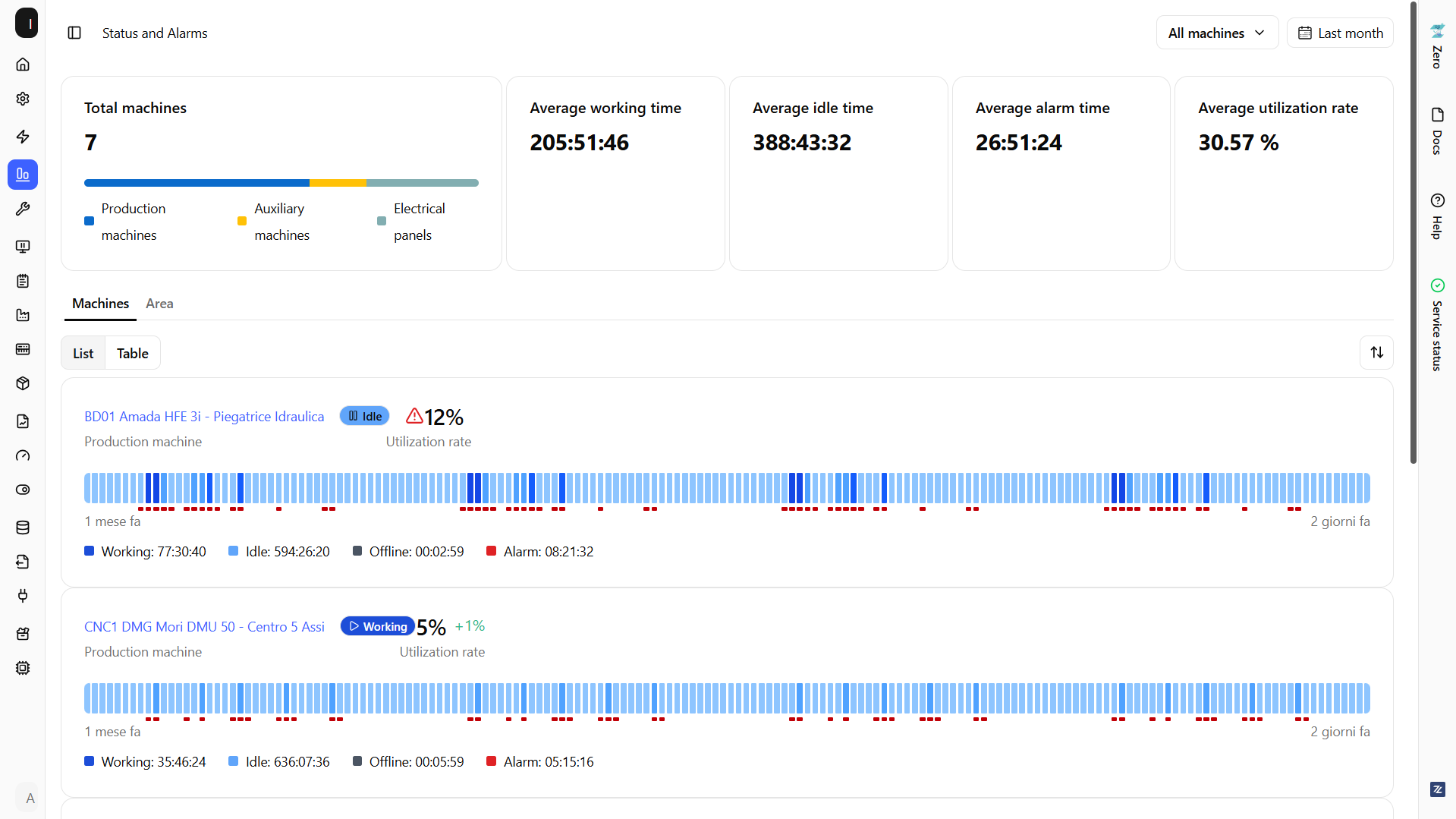
To measure success, track KPIs such as MTBF, MTTR, energy consumption, product quality and the number of emergency interventions. Periodic reporting helps identify trends and continuously optimize industrial machinery maintenance.
Your industrial machinery maintenance strategy deserves a smarter future. Investing today in predictive maintenance, IoT maintenance and industrial maintenance 4.0 means turning maintenance into a driver of operational excellence rather than a reactive expense.
Share This Story, Choose Your Platform!
About the Author: Alice Benozzi